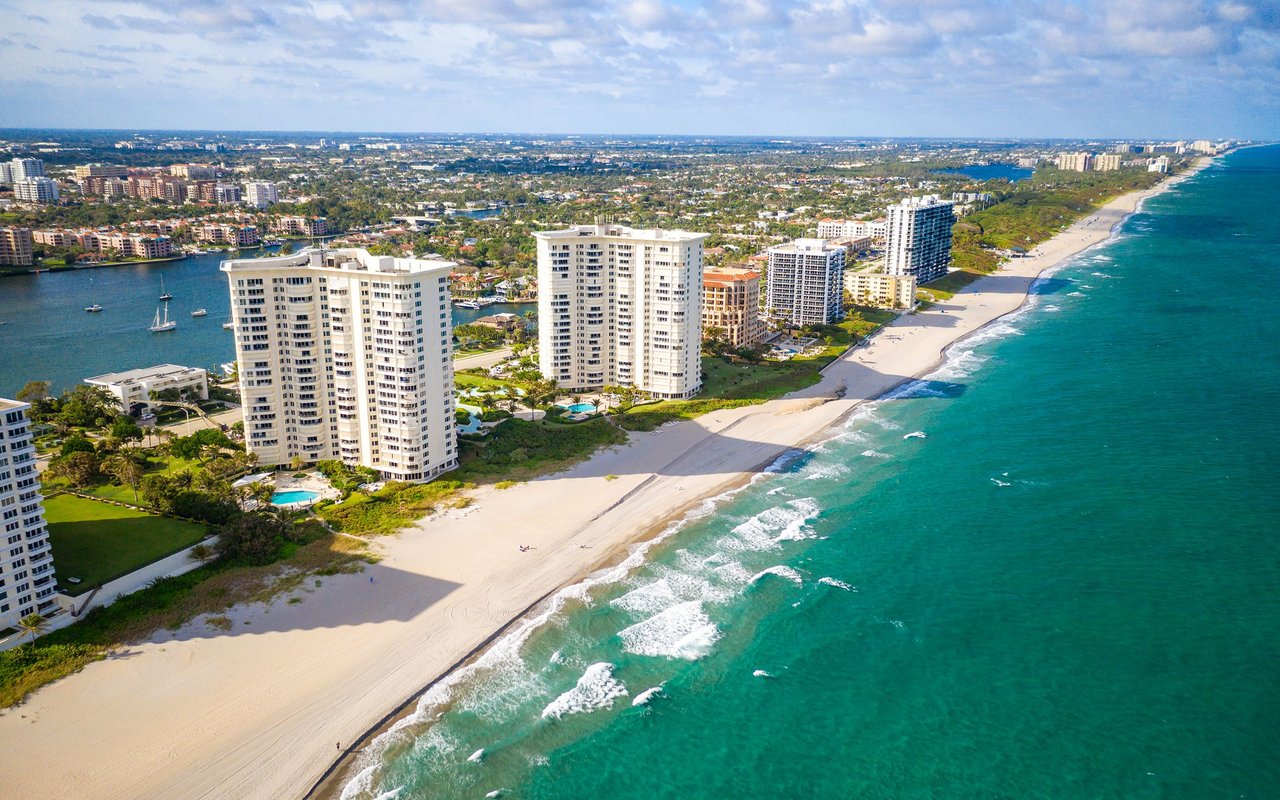
In the middle of 2023, board members at the Coronado at Highland Beach opened a letter from their insurance carrier that arrived in two parts. The first said the annual premium on the 336-unit building, which spans two towers on the west side of State Road A1A plus a beach club on the east side, would rise from $1.5 million to $1.9 million. The second, delivered soon after, said the carrier was dropping the building entirely over concerns about the roofs, leaving the board just 30 days to find replacement coverage. Board president Jason Chudnofsky later summed up why the Coronado avoided a full crisis: the association had been setting aside reserves for years. Not every building on this narrow barrier island can say the same, and that gap, not square footage or ocean frontage, is the number that actually predicts what a condo will cost you here in 2026.
The Law Behind the Scramble
Florida passed Senate Bill 4-D in 2022, a year after the Champlain Towers South collapse in Surfside killed 98 people. The law requires condo and co-op buildings three stories or taller to complete a milestone structural inspection, on a 25-year clock for buildings within three miles of the coast (which covers essentially every tower in a barrier island town like Highland Beach) and a 30-year clock everywhere else, repeating every ten years. Alongside the inspection, associations must complete a Structural Integrity Reserve Study, known as a SIRS, covering eight structural components: roof, load-bearing walls and primary members, fire protection, plumbing, electrical, waterproofing, windows and exterior doors, and a catch-all category for anything else whose failure would compromise those items.
House Bill 913, effective July 2025, added more detail. It raised the dollar threshold for that catch-all category, indexed to inflation and set at $25,675 for 2026, and gave boards a narrow escape hatch: a two-year pause on reserve contributions if a milestone inspection already identified repairs the association is actively funding.
The part that actually changed the math for owners is simpler than the acronyms suggest. Under current DBPR guidance, associations can no longer vote to waive or underfund reserves for those eight structural categories once their budget is adopted after December 31, 2024, and full funding is required starting January 1, 2026. For buildings that had spent years keeping quarterly dues artificially low, that flexibility just disappeared.
Same Island, Two Different Balance Sheets
Most condo towers along Highland Beach look interchangeable from the road: similar ages, similar hurricane glass, similar ocean views. Reserve funding is where they stop looking alike.
Toscana North, one of the two associations that make up the Toscana community, began funding its reserves years before the law forced the issue, while other buildings nearby were comfortable telling prospective buyers they carried no assessments at all, a claim that says less about financial health than about how much had simply been deferred. Toscana North's quarterly condo fee runs $5,016.20. That figure is not small, but it is a known number tied to a funded plan. The buildings still catching up are the ones where the real number has not been finalized yet, because the SIRS work or the resulting assessment hasn't been completed.
That is the shift buyers need to internalize this year. Price bracket used to be a decent proxy for building quality on this stretch of coast. It no longer is on its own, because two towers with comparable views and comparable per-square-foot prices can be carrying very different levels of deferred structural liability, decided by board votes made in 2022 and 2023, long before either building's units ever hit the market.
When a Building's Reputation Isn't Enough
Toscana carries a strong reputation among Highland Beach communities, which is exactly why a Palm Beach County Circuit Court lawsuit tied to that same community is worth knowing. Buyers Eugene and Debbie Friedlander purchased a unit at Toscana from seller Mark Kaplan in June 2024. Their contract stated Kaplan was not aware of any special assessment discussed in board meeting agendas or minutes during the preceding 12 months, and that if such an assessment existed and went undisclosed, Kaplan would be responsible for paying it in full. The lawsuit alleges that three months before closing, the community's general manager had already notified Kaplan of a pending assessment that never made it into the disclosure.
Florida law gives buyers real standing here. A 1985 Florida Supreme Court ruling established that sellers carry a duty to disclose facts that materially affect a property's value when a buyer could not reasonably discover those facts on their own. A pending assessment raised in a board meeting fits that description. But the Toscana case is a useful reminder that a well-regarded development is not a substitute for reading your own building's most recent board minutes and resale certificate. Reputation belongs to the community. Disclosure obligations belong to the specific seller and the specific unit.
The Math Behind Highland Beach's Condo-Heavy Map
Marketing copy tends to describe Highland Beach as a quiet enclave of private estates. Parcel records tell a more specific story about what the town actually is. Town records show roughly 4,200 total taxable parcels, with about 3,700 of those being condominium units and only around 367 single-family parcels. In other words, the reserve and inspection questions in this article are not a side issue affecting one or two towers. They touch the overwhelming majority of real estate transactions in this town.
That also means single-family buyers can mostly set this article aside. Chapter 718, which governs condominium associations, does not apply to detached homes, though anyone buying into a community with a master association covering shared infrastructure should still ask what that association's reserve position looks like.
What to Pull Before You Write an Offer
Before an offer goes in on a Highland Beach condo, ask for these five items and actually read them:
- The milestone inspection report and its completion date. An overdue inspection exposes the association to fines that run up to $500 a day, and it means nobody, including you, has current visibility into the building's structural condition.
- The most recent SIRS, including the baseline funding plan. That plan is required to show the association's reserve balance staying above zero throughout the funding period. If it doesn't, expect an assessment.
- Board meeting minutes from the past 12 months, specifically any mention of a special assessment discussed as an agenda item, whether or not it was formally approved.
- The resale certificate. Associations with 25 or more units generally must post governing documents, budgets, and reserve studies for owners and prospective buyers to review.
- Confirmation from your lender that the building is not on Fannie Mae's ineligible project list, since financing terms and available lenders both narrow considerably for flagged buildings.
The Financing Wrinkle
A pending special assessment does not only affect what you pay after closing. It can affect whether you close at all. If an assessment was levied before your contract date, responsibility for it typically falls on the seller, depending on how the contract is written. If it's being paid in installments, you may inherit the remaining balance as the new owner. Lenders increasingly require the full assessment paid off at closing as a condition of approval, which means cash you had earmarked for furniture or a reserve fund of your own can suddenly be redirected toward someone else's structural repair.
The stakes of getting this wrong are not theoretical. Roughly 5,000 Florida condo buildings are already locked out of conventional financing because their milestone inspections were never completed. That is a strong argument for having the inspection and reserve conversation on the first call with your agent and your mortgage contact, not the last one before closing.
None of this makes Highland Beach a poor place to buy. It makes it a place where the building, not just the unit, deserves the first hour of due diligence. A well-funded association like Toscana North's shows the reserve requirements can be met without drama. A dropped insurance policy at the Coronado shows what happens when they aren't. The difference between those two outcomes was decided years before either building's units ever went up for sale.
If you're weighing a Highland Beach condo this year, Jon Lewis can walk through a specific building's inspection history and reserve funding with you before you write an offer, and help line up financing once you know exactly what you're buying into. Let's Connect.
Quick Answers
Does Florida law require sellers to show buyers the SIRS report before closing?
Not automatically, but in practice buyers should request it directly. Associations with 25 or more units are generally required to post governing documents, budgets, and reserve studies, and a buyer is entitled to ask for the full SIRS during due diligence.
What happens if a special assessment is approved after I'm under contract but before closing?
This comes down to your contract language, which is exactly the scenario at the center of the Toscana lawsuit. A written seller obligation to disclose and pay any assessment discussed in the prior 12 months of board minutes is worth negotiating for directly, rather than relying on a verbal assurance.
Are single-family homes in Highland Beach subject to these same rules?
No. Chapter 718 covers condominium and cooperative associations specifically. Single-family HOAs fall under Chapter 720 and face lighter reserve requirements, though a master association overseeing shared infrastructure in a mixed community may still carry SIRS-like obligations worth asking about.